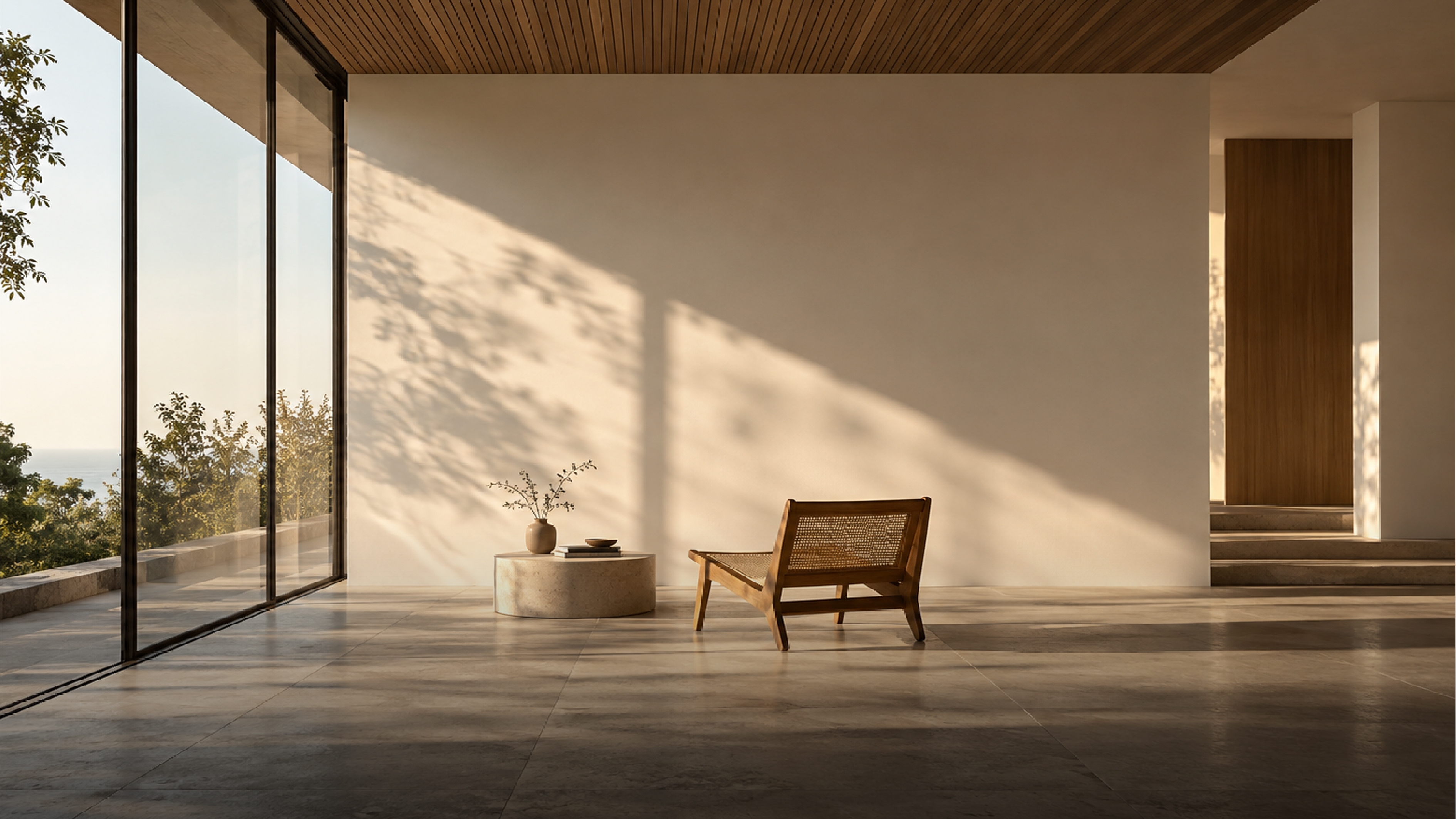
Most people feel mentally switched on all the time. Even at home.
Homes today carry work alongside rest, keep screens within reach at all hours, and stay lit the same way from morning to midnight. Design conversations in 2026 are beginning to reflect this, pointing towards interiors that feel quieter, softer, and easier to simply be in.
This is not about renovation. It is about understanding why some spaces feel harder to rest in than others, and what is quietly responsible for that.
Most people already know these experiences. They just may not know the names for them.
These ideas explain why the same number of hours at home can feel exhausting in one space and genuinely restorative in another.
The brain naturally associates spaces with behaviour. When work desks remain visible in bedrooms or laptops stay open at the dining table, the mind never fully disconnects from a state of readiness.
Over time, spaces meant for comfort begin carrying the feeling of unfinished work instead.
This also explains why multi-purpose spaces need clearer transitions between productivity and rest.
Many homes use the same bright white lighting from morning until bedtime. But cool-toned lighting keeps the body feeling alert for longer.
Research from Harvard Medical School found that blue-toned light can significantly suppress melatonin production, making it harder to properly wind down at night.
The room most associated with rest is often lit in the way least suited to it.
This growing preference for calmer interiors is also part of a wider shift towards slower living at home and emotionally comforting spaces.
Clutter is not always loud. Sometimes it is simply constant.
A Princeton Neuroscience Institute study found that visual clutter competes for the brain’s attention and increases cognitive load over time.
The idea of creating calmer environments also connects closely with thoughtful home decor and intentional interior styling.
The bedroom was once associated almost entirely with rest. Today, screens often remain active until the moment people fall asleep.
Notifications, autoplay content, and background noise keep the mind lightly engaged long after the day ends. Research around blue light exposure continues to link screens with delayed sleep cycles and disrupted rest.
Over time, even spaces meant for rest begin to feel mentally active.
Rest is deeply physical, and temperature plays a larger role in it than most people realise.
A 2021 study published in Building and Environment linked warmer indoor temperatures to delayed sleep and elevated stress levels. In warmer climates, rooms without proper airflow often stay uncomfortable well into the evening.
This is also why conversations around climate-responsive homes, natural ventilation, and low-rise living are becoming increasingly relevant again.
When every room carries the same lighting, visual density, and level of stimulation, the body receives very little signal that it is time to slow down.
Without contrast, spaces begin to blur together emotionally. Homes stop feeling like places to properly switch off.
This growing awareness around emotional ease and sensory comfort is also shaping how homes are being designed today. At Arihant, this often translates into spaces that feel more open, breathable, and connected to a slower rhythm of living. Projects like Reserve 16, with its emphasis on openness and tropical landscapes, or Mélange, designed around warmth and quieter community living, reflect this gradual shift towards homes that feel calmer to return to.
Lighting changes the emotional rhythm of a room.
Warmer lighting, especially softer yellow-toned lighting used in the evenings, tends to feel calmer and gentler within a space. Floor lamps and table lights often feel more restful than strong overhead brightness.
Not every space needs to be filled.
In Japanese design, the concept of ma refers to the intentional use of emptiness as part of the experience of a room. Research in environmental psychology similarly shows that spaces with visual breathing room often feel calmer and emotionally lighter.
A quieter room often begins with what is left out.
This thinking also connects with minimal interiors, mindful living, and homes designed around simplicity and ease.
Natural materials change how a space feels physically.
Linen, cotton, jute, and unfinished wood tend to feel softer, cooler, and less visually heavy than synthetic finishes. Studies have also linked natural materials to lower stress responses indoors.
Especially in warmer climates, breathable textures make spaces feel noticeably easier to unwind in.
Some homes feel tiring without people fully understanding why. Often, it is acoustics.
Quiet is not only visual. It is sensory too.
Homes that feel connected to light and air often feel easier to unwind in.
Research in chronobiology shows that exposure to morning light helps regulate the body’s circadian rhythm, which later affects how easily the body winds down at night.
Natural airflow matters just as much, especially in warmer climates where comfort changes significantly through the evening.
This renewed appreciation for daylight and ventilation is also why nature-connected homes and indoor-outdoor living continue to feel emotionally restorative.
The most restful homes rarely feel abrupt.
A slightly dimmer corridor, a quieter corner between rooms, or softer transitions in lighting give the mind a moment to slow down before entering another environment.
These shifts are subtle, but the body notices them immediately.
This is usually the result of many smaller choices working together.
A room that sounds softer, feels visually calmer, separates work from rest, and leaves some space open naturally asks less from the mind. Not through dramatic design, but through the steady removal of friction.
As homes continue to carry more emotional weight in everyday life, the idea of comfort is beginning to shift too. Increasingly, thoughtful residential design is focusing not only on how spaces look, but on how they allow people to feel within them.
It is also a direction that continues to shape how Arihant approaches spaces today, with greater attention to openness, natural light, ventilation, greenery, and the quieter experience of everyday living.
Rest is not something a home gives you.
But a good home stops taking it away.