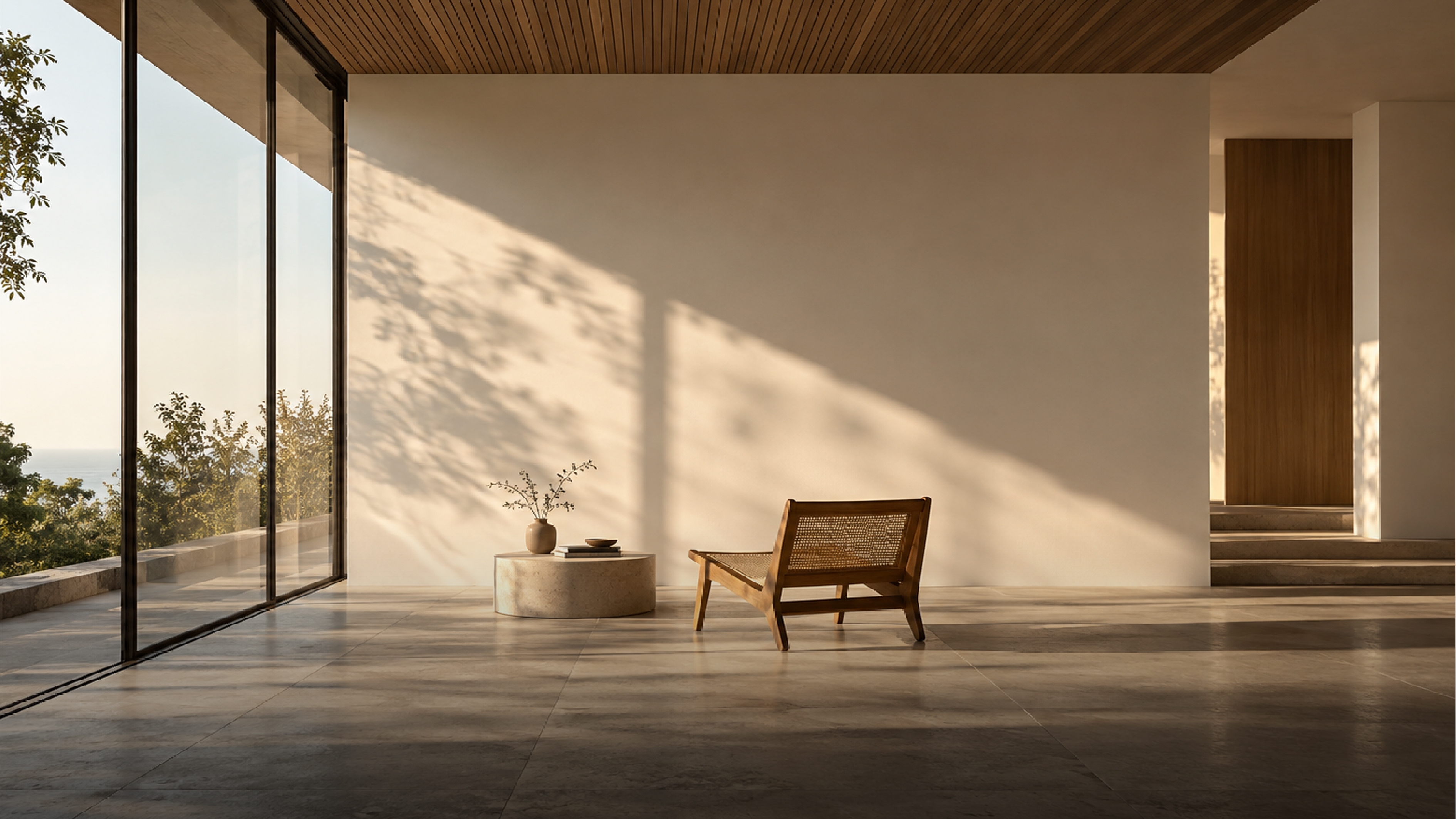
When people hear the phrase intelligent home, technology often becomes the first association. Yet, the most meaningful intelligence is rarely visible. It isn't found in devices or automation, but in the way a home understands the people who live within it.
A truly intelligent home design feels effortless from the very first day. Every space is shaped around daily habits and natural interactions, making life simpler without demanding attention. Across the homes we craft at Arihant Spaces, this quiet intelligence begins long before construction, in the way every space is thoughtfully planned to become one of our memorable spaces.
A great home doesn't ask its residents to adapt. It adapts to them.
The foundation of functional home design lies in understanding how people naturally move through a home, rather than simply arranging rooms around a floor plan.
An intelligently planned layout can:
This principle is reflected in Arihant Vivriti, where a low-density master plan creates breathing room between homes, landscape and shared spaces, allowing everyday life to unfold with greater ease.
Every home is shaped by hundreds of small habits that repeat over time.
Rather than focusing only on dimensions, thoughtful home design considers how people naturally interact with their surroundings. When spaces respond naturally to these behaviours, they remain relevant long after residents move in.
This includes:
This same thinking is reflected in Arihant Mélange, where the traditional idea of the Thinnai has been thoughtfully reinterpreted to encourage interaction while responding to contemporary lifestyles.
Natural light is most effective when it's planned around activity rather than treated as a decorative feature.
Architects carefully study how different spaces are used throughout the day before determining window placement, orientation and the movement of light across a home.
A thoughtful approach allows daylight to:
This is where home layout planning and daylight work together, allowing architecture itself to shape the experience of a home. It also offers another perspective on ideas explored in A Shift Towards More Restful Homes, where the conversation centres on comfort and wellbeing, while intelligent planning focuses on the logic behind spatial design.
One of the most overlooked aspects of residential architecture is how spaces transition from one to another.
Instead of abrupt separations, well-designed homes create a gradual shift between public, shared and private environments.
This sense of order is achieved through:
A similar approach informs the planning of Reserve 16, where movement through the community is considered as thoughtfully as the homes themselves, encouraging a stronger connection between residents and the landscape around them.
Some architectural decisions are so subtle they often go unnoticed.
Yet these are the details that make a home feel comfortable over time.
Consider elements such as:
These refinements simplify countless small moments throughout the day, creating a calmer and more elevated living experience.
These individual design decisions are rarely accidental. They are often the outcome of behavioural design, an architectural approach that begins by understanding people before shaping spaces.
Research in environmental psychology and human-centred design continues to demonstrate that intuitive spatial planning influences how comfortably people navigate, interact with and experience their surroundings.
This shift has encouraged architects to think beyond aesthetics and instead ask:
Many of these principles also contribute to long-term adaptability, a perspective explored further in What Makes a Home Future-Proof in Chennai?, where thoughtful planning is viewed as an investment in how homes continue to perform over time.
The definition of luxury living is evolving.
Today, the most valued homes aren't simply those with more features, but those that require less effort to live in. Intelligence is found in layouts that feel instinctive, details that solve practical needs and spaces that continue to evolve with the people who inhabit them.
This philosophy quietly shapes every home we craft at Arihant Spaces. Whether expressed through the low-density planning of Arihant Vivriti, the community-centred thinking behind Arihant Mélange, or the landscape-led master planning of Reserve 16, the intention remains the same: to design homes that feel intuitive from the moment life begins within them.
The finest homes aren't remembered for a single feature.
They're remembered for how naturally they become part of everyday life. It is this enduring philosophy that continues to craft memorable spaces, where thoughtful architecture quietly enriches the way people live, gather and grow.